
Glass or plastic is usually the first packaging decision a new cosmetic brand makes, and it shapes almost everything after it: how well the formula is protected, how the product looks on the shelf, what it costs to ship and how customers use it. Neither material is “better” in every case. The right choice depends on what is inside the bottle and how you sell it.
This guide compares glass, plastic (PET and PP) and acrylic cosmetic bottles side by side for Sri Lankan skincare, haircare and personal care brands. Snak Holdings has no minimum order quantity on standard items, so you can order a few glass and a few plastic bottles, test both with your formula, and decide before you commit to a bigger order.
Quick answer
- Choose glass for oils, serums, active ingredients and premium products where protection and a high-end look matter most.
- Choose plastic (PET or PP) for shampoos, body wash, cleansers, larger sizes, travel sizes and anything used in the shower, where light weight and shatter resistance matter most.
- Choose acrylic when you want a glossy, glass-like look for creams and lotions without the weight of glass.
- Light-sensitive formula? Amber is available in both glass and PET.
- Always test your actual formula in a sample bottle before ordering a full batch.
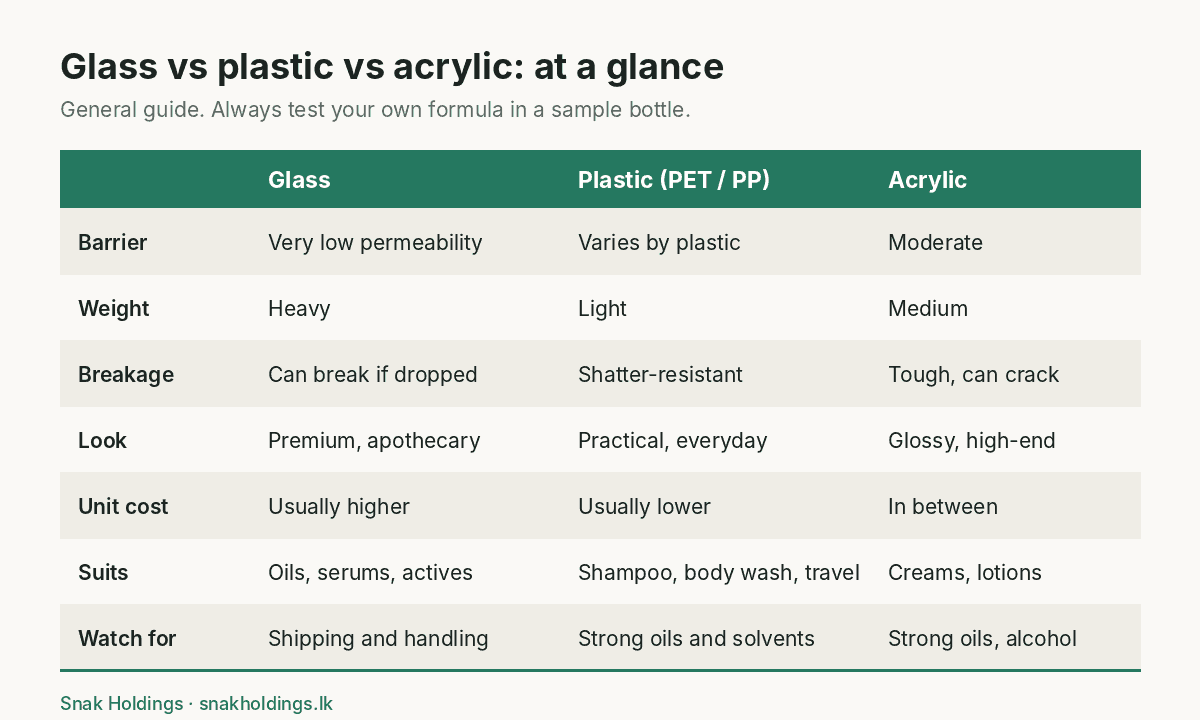
Glass, plastic and acrylic at a glance
Here is how the three main bottle materials compare on the points that matter most to a cosmetic brand. The sections below explain each one in more detail.
1. Protection: how well each material looks after your formula
Protection is the most important difference between glass and plastic, and the one customers never see.
- Glass is non-porous, so very little air or moisture passes through the walls, and it does not easily absorb fragrance or colour from the product. That makes it the usual choice for essential oils, facial oils, serums with active ingredients and fragrance-heavy products.
- Plastic varies by type. PET is clear and gives reasonable protection for most water-based products. PP is tougher and often used for squeezable or opaque bottles. Some strong essential oils, solvents and high-alcohol formulas can affect certain plastics over time, so these need testing.
- Acrylic looks like glass but is a plastic. It suits creams and lotions well, but it can be sensitive to strong oils and alcohol, so check your formula before choosing it.
Light is a separate question from material. Clear glass and clear PET both let light through. If your formula contains light-sensitive ingredients such as vitamin C, retinol or many plant oils, choose a tinted bottle. Amber Cosmetic Bottles come in both glass and PET, so you can get amber protection in either material. For serums and oils that need a dropper, see our guide on how to choose the right dropper bottle.
2. Weight, breakage and shipping
Glass is heavier and can break if dropped. Plastic is light and shatter-resistant. That difference matters more than many new brands expect.
- Online orders and courier delivery: plastic bottles are lighter to send and less likely to arrive broken. If you ship glass, budget for bubble wrap or dividers.
- Bathroom products: shampoo, conditioner and body wash are used with wet hands on hard floors. Plastic is the safer, more practical choice here.
- Large sizes: a 500ml or 1L bottle in glass is heavy to hold and pour. Plastic is the norm for family and refill sizes.
- Travel and gym sizes: customers carry these in bags, so light, unbreakable plastic makes sense.
3. Look, feel and brand positioning

- Glass reads as premium, natural and apothecary-style. It suits Ayurvedic and herbal oils, luxury skincare and gift ranges. Shaped glass such as Maraska Bottles or Box Bottles helps a product stand out without custom moulds.
- Plastic reads as practical and everyday. It is the expected format for haircare, body care and salon products, and white, black or amber plastic can still look clean and modern with a good label.
- Acrylic gives a glossy, thick-walled look that feels high-end on a shelf. Acrylic Bottles are popular for creams and lotions where presentation is part of the price.
Many brands use both in one range: glass for the hero serum or face oil, plastic for the cleanser and body lotion, with matching colours and labels.
4. Cost per bottle
As a general rule, plastic bottles cost less per unit than glass, and acrylic falls in between. Glass also adds to delivery costs because it is heavier and needs more protective packing.
Unit price is only part of the picture, though. A face oil that sells at a premium can easily carry the cost of a glass bottle, and the bottle helps justify the price. A shampoo sold in large volumes needs a lower packaging cost per unit, which points to plastic. For exact prices on the bottles you are considering, ask the team on WhatsApp; wholesale pricing is available.
5. Match the material to your product
Putting it all together, here is the usual starting point for common cosmetic products. Treat it as a shortlist to test, not a final answer.
| Product | Usual choice | Why |
|---|---|---|
| Face serums and facial oils | Glass, often amber | Protects active ingredients and oils; premium look. |
| Essential oils and fragrance oils | Glass | Strong oils can affect some plastics; glass is non-porous. |
| Hair and body oils | Glass or PET | Glass for premium and herbal ranges; PET for lighter, lower-cost bottles. |
| Lotions and moisturisers | Glass, PET or acrylic with a pump | Depends on price point; a pump keeps the product clean. |
| Creams | Acrylic or glass | Glossy, premium presentation. Thick creams often suit a jar instead. |
| Shampoo, conditioner, body wash | Plastic (PET or PP) | Light, shatter-resistant and safe in the shower. |
| Facial cleansers and toners | Plastic | Daily use at the sink; flip top or pump for easy dispensing. |
| Body sprays and deodorants | Glass or plastic with a spray | Glass for a fragrance-style look; plastic for everyday carry. |
If your product is a gel or a thick cream, a bottle may not be the right format at all. Tubes and jars are often easier to use; see our guide to the types of cosmetic tubes and what each is for.
Checks to make before you order
Whichever material you choose, a few simple tests with sample bottles will tell you more than any comparison chart.
- Compatibility test: fill a sample with your real formula and store it for several weeks, ideally somewhere warm. Check for changes in colour, smell or texture, and for any clouding, softening or cracking of the bottle.
- Leak test: fit the closure you plan to use, lay the bottle on its side for a day and check the neck.
- Neck size check: make sure the bottle and closure share the same neck size. For example, the Glass Lotion Bottles have a 28mm neck, and Lotion Pumps come in 20mm, 24mm and 28mm.
- Drop and delivery test: if you sell online, pack a filled glass bottle the way you would ship it and see how it survives.
- Label test: wrap a printed label around the bottle. Curved or shaped bottles have less flat space than they appear to.
- Reorder check: confirm the same bottle, colour and closure will be available when you reorder so your product stays consistent.
Glass and plastic cosmetic bottles at Snak Holdings
Snak Holdings manufactures and supplies cosmetic packaging in Sri Lanka, with no minimum order quantity on standard items, both the products on this website and the wider catalogue in our shop. We sell retail and wholesale, and wholesale pricing is available. That makes it easy to buy a handful of glass and plastic bottles, test them side by side, and reorder in larger quantities once you have decided.
Because the catalogue is large, you can also customize your packaging without an MOQ by mixing and matching bottles, closures (lotion pumps, treatment pumps, mist sprayers, flip tops and caps), colours and finishes from the standard range. Logo printing and fully custom OEM packaging are available on request. For fully custom OEM work we recommend starting from about 500 pieces, because customization costs are high, and it usually takes around two weeks depending on the customization. Sustainability is part of how we work: we prioritise eco-friendly materials and offer recyclable packaging options.
| Product | Material | Sizes / options | Good for |
|---|---|---|---|
| Glass Lotion Bottles | Glass | 100ml, 200ml; clear; 28mm neck; pump | Lotions and premium skincare |
| Amber Cosmetic Bottles | Glass or PET | 30ml, 150ml, 200ml; amber, glossy; screw cap or pump | Light-sensitive oils, lotions and herbal products |
| Oil Bottles | Glass or PET | 100ml; 18mm or 20mm neck; screw cap | Hair, body and massage oils |
| Maraska Bottles | Glass | 100ml; black or silver; screw cap | Botanical and premium oils |
| Box Bottles | Glass or PET | 30ml, 50ml; screw cap | Serums, oils and samples |
| Plastic Cosmetic Bottles | PET, PP, plastic | 40ml to 1L; amber, black, clear or white; flip top, screw cap or pump | Shampoo, body wash, cleansers and lotions |
| Acrylic Bottles | Acrylic | 50ml, 100ml; glossy; screw cap, pump or spray | Creams, lotions and premium skincare |
| Deodorant Bottles | Glass or plastic | 30ml, 50ml; spray | Deodorants and body sprays |
| Lotion Pumps | Plastic | 20mm, 24mm, 28mm neck | Lotions, creams, gels and liquids |
| Spray Pumps | Plastic | 20mm neck; pump or spray | Mists, toners and sprays |
| Plastic Flip Top Caps | Plastic | 18mm, 20mm, 24mm; black, clear, green, purple or white | Cleansers, shampoos and squeeze bottles |
| Press-On Caps | Plastic | 20mm, 24mm; gold, silver or white | Finishing compatible bottles |
All listed products are in stock, and the full range is wider than what is shown online. Browse the Cosmetic Bottles and Pumps & Caps categories, or the Glass Dropper Bottles range for serums. If you are planning your first launch, our guide to choosing cosmetic packaging for a startup in Sri Lanka walks through the full process.
Where to buy cosmetic bottles in Colombo
You can see and handle glass, plastic and acrylic bottles at our shop at 24, Madampitiya Road, Colombo 01500, Sri Lanka. We are open Monday to Saturday, 9am to 5.30pm, and closed on Sunday. Bring a sample of your product if you can, so you can compare bottles with it in hand.
Still deciding between glass and plastic?
Tell us what your product is, how thick it is, the size you have in mind and how you plan to sell it. We’ll suggest glass and plastic options that suit it and let you know what’s in stock.
Frequently asked questions
Is glass or plastic better for cosmetics?
Neither is better for everything. Glass is usually the better choice for oils, serums and products with active ingredients, because it is non-porous and looks premium. Plastic is usually better for shampoos, body wash, large sizes and products sent by courier, because it is light and shatter-resistant.
Can I put essential oils in plastic bottles?
Strong essential oils can affect some plastics and acrylic over time, so glass is the usual choice, especially for pure or concentrated oils. If you want to use plastic for a diluted oil blend, test it in a sample bottle for several weeks first.
What is the difference between PET and acrylic bottles?
Both are plastics. PET is light, clear and widely used for everyday cosmetic and haircare bottles. Acrylic bottles have thicker, glossier walls that look more like glass, which is why they are popular for premium creams and lotions.
Do amber bottles have to be glass?
No. Amber is available in both glass and PET. Snak Holdings stocks Amber Cosmetic Bottles in glass and PET, and Plastic Cosmetic Bottles also come in amber.
Can glass and plastic bottles be customized with my logo?
Yes. The simplest way to create your own look is to mix and match bottles, closures, colours and finishes from the standard range, with no minimum order. Logo printing and fully custom OEM packaging are available on request; for fully custom OEM we recommend starting from about 500 pieces, and it usually takes around two weeks depending on the work. Share your requirements on WhatsApp and the team will explain what is possible.